
Safer Food Scores /
  • Home
    • Why Choose Us
    • Meet the team
    • Food Manufacturers
    • Central and Dark Kitchens
    • Schools and Universities
    • Hospitals and Care Homes
    • Food Retail
    • Hotels and Food Service
    • Offices and Workplaces
    • Craft Baker Health and Safety Consultants and Auditors
    • Craft Butcher Consultants and Auditors
  • Consultancy
    • About Our Consultancy
    • Food Hygiene
      • Food Hygiene Consultancy
      • HACCP & Food Safety Management Systems
      • Food Hygiene Audit
      • SALSA accreditation
      • BRC accreditation
      • Food sample testing
      • SFBB Coaching
      • Food Hygiene Ratings
    • Food Allergens
      • Allergens Consultancy
      • Allergens Audit
    • Health & Safety
    • Food Labelling
      • Natashas Law Food Labelling Guidance
      • Label Compliance Checks
      • Nutritional Content Checks
      • Food Labelling Courses
    • Food Date Labels
    • Legal Support
    • Primary Authority
    • Restaurant start ups
  • Training
    • About Our Training
    • E-learning
    • Course Dates & Prices
    • Food Hygiene Courses
      • Level 1 Award in Food Safety
      • Level 2 Award in Food Safety
      • Level 2 Award in HACCP
      • Level 3 Award in Food Safety
      • Level 3 Audit and Inspection Skills
      • Level 4 Award in Food Safety
      • Food Hygiene Update
    • Food Allergen courses
      • Level 2 Allergen Awareness
      • Level 3 Award in Food Allergen Management Training
    • Food Labelling Courses
    • Health & Safety Courses
      • Level 1 in Health & Safety
      • Level 2 in Health & Safety
      • Level 3 in Health and Safety
      • Level 2 in Risk Assessment
    • Train the Trainer Courses
      • Level 3 in EAT – Education And Training
      • Level 3 Award in Delivering Training
    • Fire Safety Courses
      • Level 1 In Fire Safety
      • Level 2 In Fire Safety
    • Environmental courses
      • IEMA Environmental Sustainability Skills for the Workforce
      • IEMA Environmental Sustainability for Managers
    • Licensing Courses
      • Level 2 For Personal Licence Holders
    • Training Venues
      • London – Central
      • London – West
      • Hertfordshire
      • Bedfordshire
      • North Bucks
      • South Bucks
      • Essex
  • Software
    • About our software
    • Digital diaries
    • Audit management
    • Incident management
    • Training management
    • Risk management
    • E-learning
  • News
  • Clients
  • Contact
    • Contact Us
    • Directions
    • Join Our Team
    • Referrals
Safer Food Scores
  • Home
    • Why Choose Us
    • Meet the team
    • Food Manufacturers
    • Central and Dark Kitchens
    • Schools and Universities
    • Hospitals and Care Homes
    • Food Retail
    • Hotels and Food Service
    • Offices and Workplaces
    • Craft Baker Health and Safety Consultants and Auditors
    • Craft Butcher Consultants and Auditors
  • Consultancy
    • About Our Consultancy
    • Food Hygiene
      • Food Hygiene Consultancy
      • HACCP & Food Safety Management Systems
      • Food Hygiene Audit
      • SALSA accreditation
      • BRC accreditation
      • Food sample testing
      • SFBB Coaching
      • Food Hygiene Ratings
    • Food Allergens
      • Allergens Consultancy
      • Allergens Audit
    • Health & Safety
    • Food Labelling
      • Natashas Law Food Labelling Guidance
      • Label Compliance Checks
      • Nutritional Content Checks
      • Food Labelling Courses
    • Food Date Labels
    • Legal Support
    • Primary Authority
    • Restaurant start ups
  • Training
    • About Our Training
    • E-learning
    • Course Dates & Prices
    • Food Hygiene Courses
      • Level 1 Award in Food Safety
      • Level 2 Award in Food Safety
      • Level 2 Award in HACCP
      • Level 3 Award in Food Safety
      • Level 3 Audit and Inspection Skills
      • Level 4 Award in Food Safety
      • Food Hygiene Update
    • Food Allergen courses
      • Level 2 Allergen Awareness
      • Level 3 Award in Food Allergen Management Training
    • Food Labelling Courses
    • Health & Safety Courses
      • Level 1 in Health & Safety
      • Level 2 in Health & Safety
      • Level 3 in Health and Safety
      • Level 2 in Risk Assessment
    • Train the Trainer Courses
      • Level 3 in EAT – Education And Training
      • Level 3 Award in Delivering Training
    • Fire Safety Courses
      • Level 1 In Fire Safety
      • Level 2 In Fire Safety
    • Environmental courses
      • IEMA Environmental Sustainability Skills for the Workforce
      • IEMA Environmental Sustainability for Managers
    • Licensing Courses
      • Level 2 For Personal Licence Holders
    • Training Venues
      • London – Central
      • London – West
      • Hertfordshire
      • Bedfordshire
      • North Bucks
      • South Bucks
      • Essex
  • Software
    • About our software
    • Digital diaries
    • Audit management
    • Incident management
    • Training management
    • Risk management
    • E-learning
  • News
  • Clients
  • Contact
    • Contact Us
    • Directions
    • Join Our Team
    • Referrals

SFS Hub Login

Contact Us

News

Back to blog

Charcuterie food safety – what makes it safe to eat
26 Feb 2025
By: Emma Milne

Charcuterie food safety is essential since many charcuterie products although ready to eat, are uncooked and often stored at room temperature. For most high protein foods this would be a recipe for food poisoning(!) So why is charcuterie different?

What makes charcuterie safe?

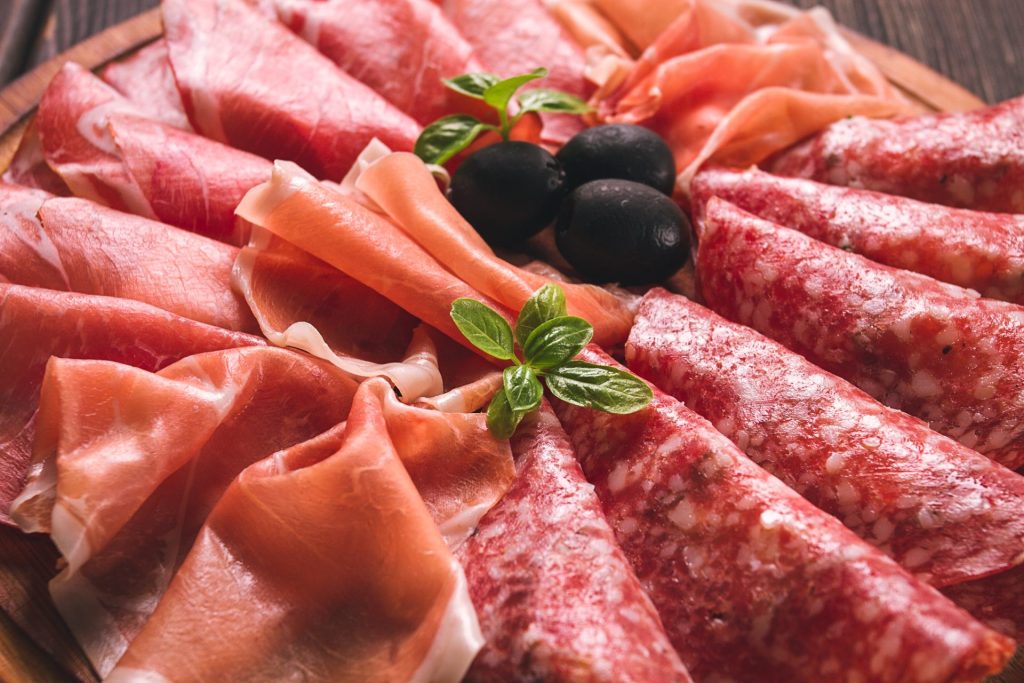
Charcuterie is a term typically used to describe dried, fermented or cured meats such as prosciutto, salami, serrano ham, chorizo. It relies on natural preservation methods.

The two most critical food safety factors are acidity and water activity:

  • Acidity (pH): Lowering the pH of meat through curing or fermentation inhibits the growth of harmful bacteria. A pH of below 4.6 prevents the growth of most harmful bacteria.
  • Water activity (aw): Reducing available water in meat through drying  also inhibits the growth of harmful bacteria. A water activity of below 0.85 prevents most harmful bacteria.

Proper control of these factors creates an inhospitable environment for harmful bacteria (pathogens) such as Clostridia, Staphylococci, Salmonella, Listeria, and E. coli bacteria.

How do additives help with charcuterie safety?

Curing salts and preservatives also play a crucial role in charcuterie food safety.

  • Nitrates and nitrites interfere with how bacteria build protein so that they cannot grow. These preservatives in particular prevent the growth of Clostridium botulinum. However do not exceed the legal limits for curing agents, as high levels of nitrates/nitrites can be harmful.
  • Sodium chloride (table salt) reduces the water activity thus inhibiting growth.
  • Starter cultures contain harmless bacteria that outcompete harmful microbes for food so they cannot multiply. They  often produce acid as the meat ferments which lowers the pH and reduces the growth of harmful bacteria further.

Why is a HACCP required to produce charcuterie?

HACCP stands for Hazard Analysis and Critical Control Points and is a systematic method of ensuring that you have considered what could go wrong and how to prevent that happening. By law, you need to record a HACCP plan if producing these foods as a business.

Depending on the product, acidity and water activity might be used to control charcuterie food safety in isolation, in combination with each other or, in combination with other controlling factors such as temperature and additives.

Food businesses need to identify the harmful bacteria that may be present, what is needed to prevent their survival and then set limits of acceptability. This information can be provided by a food safety consultant and/or peer reviewed scientific research. The National Craft Butchers Association has also provided a Primary Authority Assured Charcuterie Guide for their members and regulators to refer to.

How do I check and prove charcuterie food safety?

Validation testing and regular monitoring of these limits of acceptability will ensure charcuterie is safe to eat. Typical checks include acidity test using a pH meter, water activity using an aw meter or monitoring weight loss, and microbiological testing of food samples.

Records of these checks should be kept for three years to show to regulators when inspecting, and to prove due diligence should something go wrong.

What factors can affect the safety and quality of charcuterie?

Charcuterie production requires strict hygiene and controlled processing conditions. Here are some factors that you should consider.

  • Ingredients

    • Source meat only from reputable suppliers who follow strict food hygiene protocols.
    • Ensure it is free from contamination, such as faecal matter, bone dust, or hair.
    • Avoid meat with poor pH balance (e.g., Pale Soft Exudative (PSE) or Dark Firm Dry (DFD) meat) as it affects preservation effectiveness.
  • General hygiene

    • Practice good personal hygiene and proper handwashing.
    • Clean and sanitise food contact surfaces and equipment before and after use.
    • Maintain separate storage areas for raw and finished products.
  • Temperature control

    • Store raw meat at 0°C to 4°C to reduce bacterial growth before processing.
    • Cure meat between 3°C and 5°C to enable uptake of the salt but prevent spoilage.
    • Ferment meat between at 18–24°C to ensure proper acidification.
    • Dry meat between10–18°C and ensure stable humidity.
  • Airflow and humidity

    • Poor airflow causes uneven drying, leading to spoilage or case hardening (where the outer layer dries too quickly, trapping moisture inside).
    • Maintain humidity between 75–80% to prevent excessive moisture loss or mould overgrowth.
  • Mould management

    • While some moulds are beneficial, uncontrolled mould growth can produce harmful toxins in the product that can be cancer-causing.
    • Wipe excess mould with vinegar and clean cloths.
    • If using mould cultures, do not apply potassium sorbate, as it inhibits both good and bad moulds.
  • UV light for pathogen reduction

    • Some creators use UV lighting in curing rooms to reduce surface bacteria.
    • Ensure UV exposure is controlled, as excessive use may dry out products.

How do I store charcuterie products?

Once charcuterie is cured and dried, proper storage is essential:

  • Ambient-stable products: Store at cool, dry temperatures (below 18°C).
  • Refrigerated charcuterie: Maintain at 0–8°C and prevent moisture build-up.
  • Vacuum packaging: Reduces oxygen exposure but may result in Clostridia growth if shelf life and/or temperature is not carefully controlled.

Label all products according to legal requirements including batch codes to ensure traceability in case of a product withdrawal or recall.

Conclusion

Ensuring food safety in charcuterie production is a combination of science, hygiene, and quality control. Safer Food Scores are food safety specialists, please contact us for more information on the services that we can offer.

Any guidance given in our articles is not official and Safer Food Scores can take no responsibility if the information is used to form part of any legal or regulatory compliance for your business. However, please do get in touch if you are interested in our support services and would like to benefit from official guidance relating to your particular circumstances, email [javascript protected email address]

BlogKeep up to date

  • Our Newsletter
  • Free Food Hygiene Tips
  • Health and Safety
  • Food Safety
  • Hospitality Industry
  • Food Standards Agency

BlogCategories

  • Case Studies
  • Compliance Software
  • Enforcement
  • Fire safety
  • Food allergies
  • Food hygiene ratings
  • Food labelling
  • Food safety
  • Food supplier assurance
  • Food waste
  • HACCP
  • Health & safety
  • Healthy eating
  • hospitality
  • Pest control
  • Public health
  • Risk Assessment
  • Safer Food Scores news
    • Insights
  • Sustainability
  • Training
  • Uncategorised
    • Multi-Site Operators

BlogTags

#compliance allergen labelling Allergen Management calorie labelling care home compliance compliance management system compliance software CQC compliance Customer Experience digital compliance EHO inspections fire risk assessment Food date labels Food Hygiene food labelling food safety food safety audits food safety compliance Food Safety Consultancy Food Safety Consultant food safety culture food safety management food safety management system food safety software food safety training free offers HACCP health and safety Hospitality hospitality compliance Hospitality Industry hospitality management inspection readiness Leadership multi-site compliance multi-site operations operational compliance Pest control PPDS regulatory compliance Restaurant Management risk management software salmonella Staff Training UK Hospitality

BlogArchive

Client testimonials

Safer Food Scores give us the confidence that risks are identified, standards are maintained and our teams are properly supported.

We have worked with members of the team for over 20 years, and they continue to deliver practical training, clear documentation and straightforward advice that works in day-to-day operations.

Their 6-monthly audits help us maintain high standards across our sites, and they are always professional, responsive and knowledgeable. A pleasure to work with and highly recommended.

Director

The Stafford is one of London’s most historic and quintessentially English five-star hotels. Our teams provide unrivalled levels of service and expect our suppliers to do the same. Safer Food Scores have not disappointed.

The team at Safer Food Scores visit regularly to support and coach our chefs and to keep us up-to-date with new legislation and guidance. They have developed an easy to use food safety management system that is primary authority assured. This means that local environmental health officers and our guests can be confident that it will achieve high standards of food safety, and we can be confident that we will receive fair and consistent enforcement.

Safer Food Scores are always on hand with honest and easy to understand advice and I would be happy to recommend their services.

General Manager The Stafford London

Safer Food Scores have helped us identify risks, stay compliant and achieve maximum hygiene ratings across all of our sites.

Over the past four years, they have supported us in implementing food safety and health & safety management systems, providing practical guidance, clear recommendations and a thorough audit process.

Their team are knowledgeable, responsive and easy to work with, and we would highly recommend them to any business looking for expert support in food safety and health & safety.

Regional Director Pentahotels UK
View all testimonials

Sign up to
our newsletter

01442 877322 hello@saferfoodscores.co.uk
Safer Food Scores Ltd, Berkhamsted House, 121 High Street, Berkhamsted, Hertfordshire, HP4 2DJ
© 2026 Safer Food Scores
  • Contact
  • GDPR Compliant Privacy Policy
Website By FL1 Digital

Subscribe to our newsletter for exclusive access to this PDF!


We may use the information provided above to contact you in relation to your enquiry. Occasionally, we’d like to send you information that develops and promotes our services that we believe are relevant to you.

Clicking “DOWNLOAD NOW” tells us that you’re OK with this and you also agree to our privacy policy. You can, of course, opt out of these communications at any time.


Subscribe to our newsletter for exclusive access to this PDF!


We may use the information provided above to contact you in relation to your enquiry. Occasionally, we’d like to send you information that develops and promotes our services that we believe are relevant to you.

Clicking “DOWNLOAD NOW” tells us that you’re OK with this and you also agree to our privacy policy. You can, of course, opt out of these communications at any time.


Subscribe to our newsletter for exclusive access to this PDF!


We may use the information provided above to contact you in relation to your enquiry. Occasionally, we’d like to send you information that develops and promotes our services that we believe are relevant to you.

Clicking “DOWNLOAD NOW” tells us that you’re OK with this and you also agree to our privacy policy. You can, of course, opt out of these communications at any time.


Subscribe to our newsletter for exclusive access to this PDF!


We may use the information provided above to contact you in relation to your enquiry. Occasionally, we’d like to send you information that develops and promotes our services that we believe are relevant to you.

Clicking “DOWNLOAD NOW” tells us that you’re OK with this and you also agree to our privacy policy. You can, of course, opt out of these communications at any time.


Subscribe to our newsletter for exclusive access to this PDF!


We may use the information provided above to contact you in relation to your enquiry. Occasionally, we’d like to send you information that develops and promotes our services that we believe are relevant to you.

Clicking “DOWNLOAD NOW” tells us that you’re OK with this and you also agree to our privacy policy. You can, of course, opt out of these communications at any time.