
Food Safety Behind the Bar: Why It Deserves the Same Attention as the Kitchen
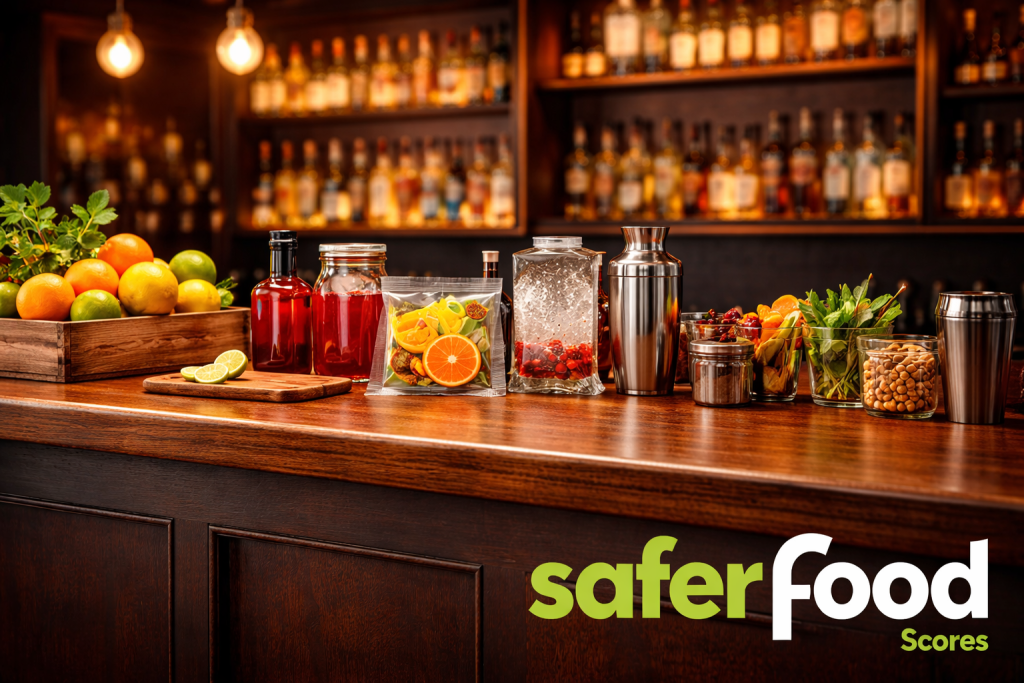
When people think about food safety, the focus nearly always falls on kitchens. Cooking temperatures, cross contamination, cleaning schedules and allergen controls are rightly scrutinised.
But what often gets overlooked is the bar — an area where food safety risks can be just as significant if not managed properly.
Modern bars are no longer just pouring drinks. They are preparing food products such as syrups, cordials, fresh juice blends, infusions and garnishes. In some cases, they are even using vacuum packing to improve efficiency.
All of these processes introduce the same hazards found in kitchens — including microbial growth, contamination, temperature abuse and unsafe shelf life practices.
Why Food Safety Behind the Bar Matters
The rise of craft cocktails and in-house preparation has transformed bar operations. However, it has also increased risk.
Unlike commercial products, many bar-made ingredients:
- Do not go through a validated kill step
- Contain fresh, high-risk ingredients
- Are stored for extended periods
- Rely on informal or inconsistent processes
This makes food safety behind the bar a critical but often underestimated area.
Shelf Life of Syrups, Mixes and Infusions
Homemade syrups, cordials and mixers are inherently higher risk than commercially produced alternatives.
Ingredients such as fruit, herbs, spices and dairy all carry a natural microbial load. While sugar content and acidity can slow microbial growth, they do not automatically make a product safe or shelf stable.
Best practice includes:
- Working from the shortest shelf life ingredient
- Applying conservative use-by dates
- Storing under correct temperature control
- Labelling clearly with preparation and discard dates
- Using evidence-based decisions rather than taste or appearance
Using pH and Scientific Controls to Extend Shelf Life
Some bars attempt to extend shelf life using technical controls such as pH adjustment, sugar concentration (°Brix) or refrigeration.
These methods can be effective — but only when properly controlled and monitored.
Understanding pH in food safety
pH plays a key role in microbial growth. Many harmful bacteria struggle to grow at a pH of 4.5 or below, which is why acidic products can last longer.
However, this only works if:
- pH is consistent throughout the product
- It is measured using a calibrated meter
- Recipes and processes are controlled and repeatable
- Storage conditions are maintained
Important reminder
Acidity, sugar and temperature do not work in isolation. A product can still become unsafe if:
- It is contaminated during preparation
- It is stored incorrectly
- Controls are not consistently applied
If extending shelf life, you must have:
- Documented recipes and processes
- Validated safety limits (e.g. maximum pH, storage temperature)
- Routine monitoring and record keeping
- Staff training that explains why controls matter
Without this level of control, shorter shelf lives are safer and more legally defensible.
Vacuum Packing Is Not a Shortcut
Vacuum packing is increasingly used in bars for fruits, herbs and infusions. However, it introduces specific risks.
Removing oxygen does not make food safer — it changes the environment. Certain harmful bacteria, including Clostridium botulinum, can grow in low-oxygen conditions.
Safe vacuum packing requires:
- Continuous refrigeration
- Strictly controlled, short shelf lives
- Clear labelling
- A documented risk assessment and procedure
Vacuum packing should never be used simply to extend shelf life without proper validation.
Allergens, Storage and Everyday Controls
Bars regularly handle allergens such as:
- Nuts
- Milk
- Eggs
- Cereals
- Sulphites
Cross contamination risks are often underestimated, particularly in:
- Shared tools and equipment
- Garnish stations
- Ice wells
- Blenders
Poor storage practices and lack of utensil control can quickly undermine food safety standards.
Raising the Bar on Food Safety
Improving food safety behind the bar does not require complex systems — it requires the right mindset.
Bar operations should be fully integrated into the food safety management system, with the same focus as the kitchen on:
- Risk assessment
- Monitoring and record keeping
- Labelling
- Staff training
If it is treated like food, it must be managed like food.
Need Support with Bar Food Safety?
If you would like support reviewing your bar processes, shelf life controls or food safety systems, our team can help.
Nicky Slavid
Senior Technical Director, CEnvH CertIOSH
📞 01442 877322
🌐 www.saferfoodscores.co.uk