Time to Care: Why Better Compliance Management Means Better Care
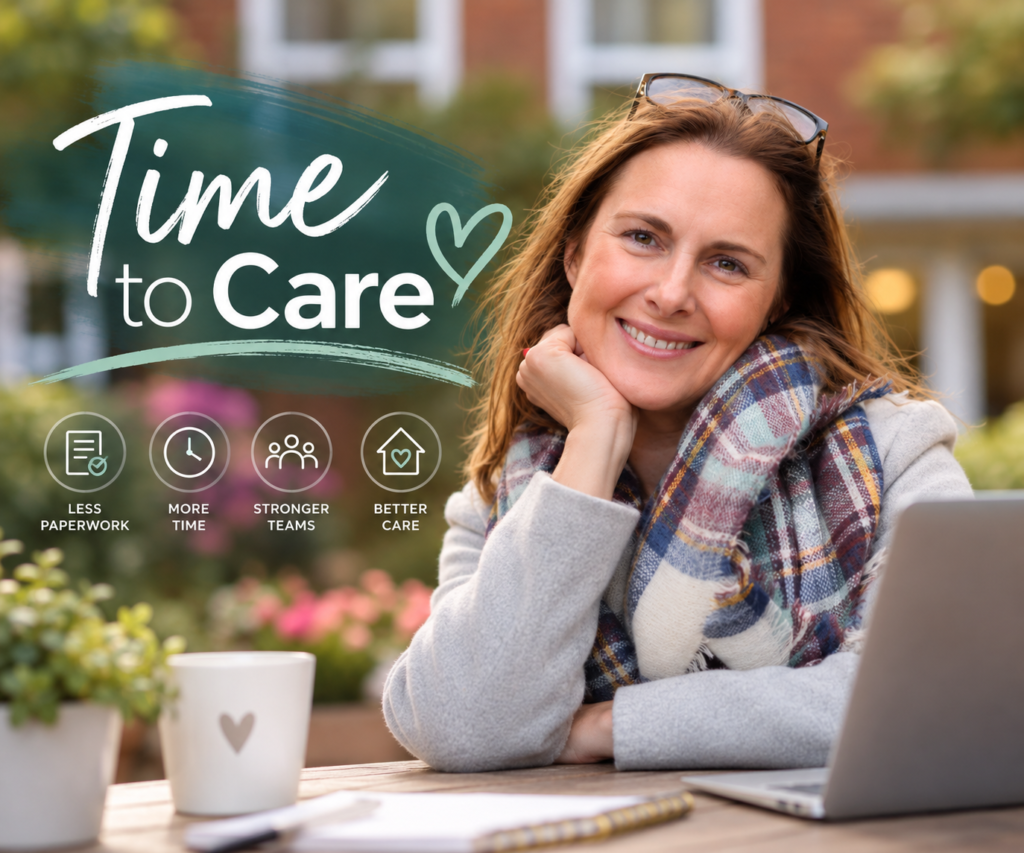
What if managing compliance in a care home wasn’t about chasing paperwork, but about creating more time to improve the lives of residents?
Less than 12 months ago, I was sitting at my desk feeling overwhelmed by the sheer volume of food safety, health and safety, audits, inspections, risk assessments and action plans involved in running care homes.
I knew these processes were important. They protect residents, support staff and help us meet our regulatory responsibilities.
But I kept coming back to one question.
Were we spending too much time demonstrating compliance and not enough time using that information to make things better?
That frustration became the starting point for A Safer Risk (ASR), our digital compliance management platform.
Today, all our care home managers are using ASR, and the biggest benefit hasn’t simply been moving documents online.
It’s been changing how we manage our homes.
From compliance paperwork to meaningful action
Traditional care home compliance management can become a cycle of checks, audits, reports and action plans.
A manager completes an audit. An issue is identified. An action is recorded. The next month, the same issue might appear again.
But has anything really improved?
Consider a familiar audit finding:
“Handover not completed on care plan software.”
That tells us something went wrong, but it doesn’t tell us how to prevent it happening again.
A more meaningful action might be:
“Create a visual guide for the staff room showing what a meaningful handover should include when using PCS.”
Now we have something specific, practical and achievable.
We can allocate responsibility, agree a deadline, monitor completion and, importantly, check whether the action has made a difference.
This is one of the biggest changes we’ve seen since introducing ASR.
Our managers are increasingly thinking beyond identifying problems and towards creating solutions.
And that’s what an effective audit should achieve.
Making monthly care home management meetings more valuable
One of the most noticeable improvements has been in our monthly business meetings.
Previously, managers would bring their compliance information to the meeting.
We would review documents, compile reports, discuss outstanding actions and try to establish where each home stood.
It was necessary, but it wasn’t always the best use of everyone’s time.
Now, our managers can complete and review their compliance information before the meeting.
Documents are available online. Audits have been completed. Outstanding actions are visible. We can see what has been resolved and what still needs attention.
Instead of spending our meetings gathering information, we can spend them acting on it.
We can ask much better questions:
- What would make a meaningful difference to our residents?
- Are there recurring risks we could prevent?
- What do our staff need to do their jobs better?
- Where should we be investing in our homes?
- What have we improved since our last meeting?
Importantly, our teams can contribute ideas before the meeting takes place.
It changes the conversation from “What haven’t we done?” to “What could we do better?”
Better maintenance management means fewer surprises
Care home health and safety management involves a significant number of routine checks, statutory inspections and maintenance responsibilities.
Lift inspections, equipment servicing, fire safety checks, repairs and general building maintenance all need to be managed.
When information is spread across spreadsheets, paper files, emails and individual diaries, it’s easy for things to become difficult to track.
Now I can see when a lift inspection is due, whether something is overdue and what action is being taken.
Routine inspections are scheduled, maintenance issues are identified earlier and repairs are less likely to be left unresolved.
We’ve also seen our repair bills reduce as routine inspections and maintenance are completed more consistently.
But the financial benefit is only part of the story.
Consider something as straightforward as poor lighting in a corridor.
An audit might identify the issue, but simply recording it doesn’t make residents safer.
The meaningful action is to assess the lighting and, where appropriate, upgrade it to help reduce the risk of falls.
That’s the difference between recording risk and actively reducing it.
Being ready for CQC without the paperwork panic
Anyone involved in managing care homes will understand the pressure that comes with an inspection.
There will always be questions, challenges and areas that require attention.
But finding routine health and safety documentation shouldn’t be one of them.
Previously, a request for a particular record could mean searching through files, checking emails or contacting a manager to locate the latest version.
With our health and safety documents stored online, the information is much easier to access.
I can see which documents are current, what needs reviewing and which actions remain outstanding.
That doesn’t mean technology guarantees compliance or a successful CQC inspection.
It means we have better visibility and can spend less time searching for evidence and more time demonstrating how we manage risks and improve our services.
And that gives me much greater confidence.
Understanding the difference between checks, risk assessments and audits
Another interesting change has been how our teams understand the purpose of different compliance activities.
They’re all important, but they aren’t interchangeable.
Daily and weekly checks help us confirm that essential controls are in place and routine tasks are being completed.
Risk assessments help us identify hazards, understand who might be harmed and decide what controls are needed to reduce risk.
Audits give us an opportunity to look more broadly at whether our systems and processes are working effectively and where improvements are needed.
The real value comes from connecting these activities.
If a routine check identifies a problem, it should be addressed.
If the same problem keeps recurring, we need to understand why.
And if an audit identifies a weakness in our systems, we should create an action that makes a lasting improvement.
The objective isn’t to complete more checks. It’s to use the information from those checks more intelligently.
Better compliance visibility helps us invest where it matters
One of the less obvious benefits of improving care home compliance management has been our ability to make more informed investment decisions.
When you have visibility across multiple homes, patterns become easier to identify.
You can see where maintenance problems are recurring, where additional equipment may be needed and where changes to the environment could help reduce risk.
That might mean improving lighting, replacing equipment, investing in staff training or changing a process that isn’t working.
Instead of reacting to problems as they arise, we can take a more planned and proactive approach.
And that is a much better way to use both our time and our resources.
Technology should give care home managers more time to care
When we started developing A Safer Risk, my ambition was relatively straightforward.
I wanted compliance to be easier to manage.
I wanted managers to know what needed doing, leadership to have better visibility and actions to be completed rather than forgotten.
Less than a year into using the platform across our homes, I’ve realised the opportunity is much bigger.
It’s about changing the way we use compliance information.
It’s about giving managers the confidence to make decisions, encouraging teams to contribute ideas and helping us identify opportunities to improve quality.
Most importantly, it’s about remembering why we do all of this in the first place.
Not for the paperwork.
Not simply for the inspection.
For the people living in our homes.
There will always be compliance responsibilities in care, and rightly so. But the systems we use should support good care, not distract us from it.
Less time chasing. Less time reacting. More time improving.
More time to care.
Written from my experience of introducing A Safer Risk across our care homes.
Find out more about A Safer Risk, our digital food safety, health and safety and compliance management platform, and how it helps organisations turn everyday compliance activity into meaningful improvements. if you are looking forward to more time to care get in touch for a meaningful demo of A Safe Risk.
The expertise behind A Safer Risk
A Safer Risk has been developed by Safer Food Scores, a team of experienced food safety and health & safety professionals who understand the everyday challenges of managing compliance. And we’re here to help with much more than software. Whether you need practical advice, independent audits, staff training, a Food Safety Management System (FSMS), a Health & Safety Management System (HSMS), or ongoing consultancy support, our team can help you put the right systems in place and make them work in practice. We believe good compliance should be straightforward, proportionate and genuinely useful — not another layer of paperwork. A Safer Risk brings the technology, while Safer Food Scores provides the expertise and support behind it.
Find out more at www.saferfoodscores.co.uk.