
Food Hygiene Ratings in the Sporting Events Rush
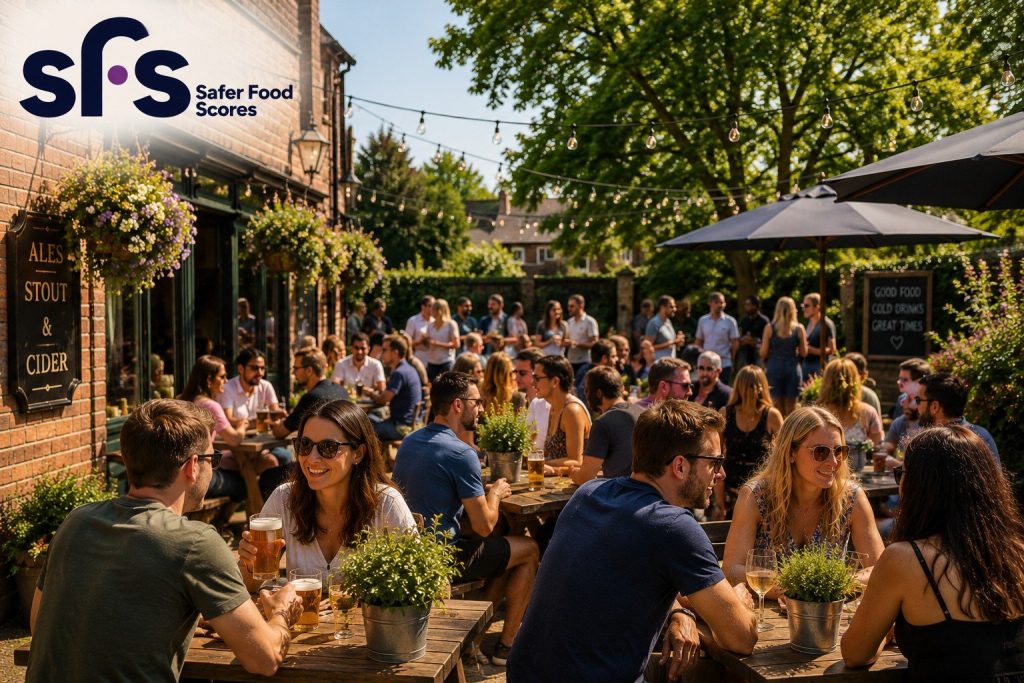
The final whistle shouldn’t be your EHO.
But for many food businesses, that’s exactly when the cracks in compliance and food hygiene ratings get exposed, once the rush has passed and the inspector walks in.
The atmosphere at Wimbledon, Lord’s or a packed pub screening the FIFA World Cup is electric.
For the Operations Director or General Manager responsible for food safety compliance, it’s something else entirely:
- More covers
- Extra staff
- Bigger deliveries
- Rising heat
And food hygiene ratings, entirely public, entirely visible, and
Entirely at risk if standards slip during the sporting events rush.
The Standard shares that Sport London, which owns six pubs across central London, reports its tables are fully booked for every England fixture. That’s the operational reality your compliance systems need to match.
More Fans, More Pressure, More Risk
Major sporting events don’t create new food safety risks. Instead, they amplify the ones already present.
Wimbledon fortnight, The Ashes at Lord’s, World Cup pub screenings they all generate the same conditions simultaneously:
- Footfall spikes
- Agency and temporary staff filling gaps
- Extended service hours
- Faster stock turnover
- Higher delivery volumes
- And, critically, heat
The science is unambiguous. UK Health Security Agency data shows Campylobacter England’s most commonly reported food borne pathogen peaks in June, while Salmonella cases peak in September.
Pathogens don’t take a summer break. Crucially, neither does your EHO.
However, the risk isn’t just biological. It’s operational too. Kitchens run at full summer capacity. Stretched teams and temporary staff manage storage areas, delivery checks and temperature logs they may have covered for less than a week.
Consequently, standards begin to drift — quietly, gradually and without anyone noticing until something forces the issue. By then, it’s your food hygiene rating that absorbs the impact.
When the Kitchen Can’t Keep Up, Food Hygiene Ratings Tell the Story
Food hygiene ratings exist precisely because of moments like this.
The consequences of that drift are real, specific and public. The Old Arcade in Cardiff – one of the oldest and most iconic pubs in Wales, packed on every rugby match day, closed its kitchen for four days following an inspection.
A four-day closure during peak sporting season isn’t bad luck. Instead, it’s a compliance gap that was always there. It just took a busy matchday to expose it.
The commercial stakes extend well beyond reputation. A poor food hygiene rating can mean:
- Lost covers and damaged customer trust
- Removal from delivery platforms that require a minimum rating of 3 to trade
- A visible red flag on Google, booking platforms and to every corporate client or insurer reviewing your business
FSA research confirms that 82% of consumers would not eat at a business rated 2, rising to 95% for a rating of 1 or 0. During a major sporting event, fans make that decision in seconds — and they make it in front of everyone you’re hoping to impress.
Smart Systems Don’t Take the Weekend Off
This is where AI genuinely earns its place, not as a concept but as a practical operational tool.
The regulator is already using it. The Food Standards Agency has piloted an AI system that predicts which food businesses face higher risk of non-compliance before an inspector arrives. Therefore, if the regulator uses AI to find risk in your business, operators should use it to remove that risk first.
Inside the kitchen, the application is immediate and specific:
- Smart sensors and IoT integration continuously monitor temperature and humidity during food processing and distribution
- AI analyses this data to maintain safety throughout the supply chain
- Machine learning models predict food spoilage and shelf-life by analysing production and storage data
- Predictive analytics catch potential issues before they become crises
During a packed Wimbledon lunch service or a World Cup screening, that continuous monitoring removes the reliance on a temporary member of staff remembering to log a fridge temperature correctly at the end of a chaotic service.
The FIFA World Cup 2026 food safety framework sets the benchmark.
The German Compliance Institute shares how temperature control, cross-contamination prevention and personal hygiene form three non-negotiable pillars, with continuous oversight throughout. That’s the standard major events demand, and AI monitoring makes meeting it consistently achievable. Find out more.
Ultimately, that continuous, documented oversight feeds directly into the Confidence in Management score behind the UK’s food hygiene ratings.
However, and this matters: AI raises the alert. It doesn’t resolve it. No algorithm has ever passed an EHO inspection. People do.
The Three Things That Decide Your Food Hygiene Rating
It’s not a single pass or fail. Instead, your score splits into three categories, each assessed separately:
- Hygiene practices
- Structural requirements
- Confidence in Management
The third category is where sporting event pressure presents the biggest challenge. Incomplete temperature records, undocumented training and gaps in HACCP paperwork all accumulate quietly. Stretched teams simply don’t have time to chase documentation during a packed service.
Therefore, event management and food safety professionals need to embrace new technology and build dynamic teams that deliver effective food safety management systems. That means having the right processes, records and expert support in place before the crowds arrive, not after.
Your kitchen might be spotless. If your records don’t prove it, your rating won’t reflect it.
Prepared Businesses Don’t Hope for a Good Inspection. They Engineer One.
Above all, this is where the combination of smart monitoring and expert human support becomes the deciding factor.
AI tools provide:
- Continuous oversight
- Real-time alerts
- A documented audit trail that feeds directly into your Confidence in Management score
However, AI cannot:
- Walk an EHO around your allergen procedures
- Prepare your management team for the specific questions an inspector will ask
- Build the food safety culture that holds standards together when the pressure is highest
That’s precisely where Safer Food Scores delivers – across restaurants, hotels, care homes, education settings and every sector where food and compliance intersect:
✔ Pre-inspection audits
✔ HACCP documentation
✔ Allergen management
✔ Food safety training
✔ Ongoing compliance support
The businesses that hold a food hygiene rating of 5 through Wimbledon, the World Cup and every major event in between aren’t lucky. Instead, they have systems that make compliance the default, not the exception.
The EHO Doesn’t Announce Their Visit. The Crowd Does
Sporting events are coming. Crowds will fill your venue, your pub, your hotel dining room and your event catering unit. Meanwhile, the EHO could follow at any point, unannounced, unscheduled and entirely within their rights.
Get it right, and your rating quietly does its job in the background. Get it wrong, and it becomes the headline on the busiest day of your year.
The businesses that protect both their food hygiene rating and their reputation throughout the sporting season recognise that compliance is a continuous process. Consistent standards, regular checks, and proactive preparation are what keep successful venues inspection-ready all year round.
Food hygiene ratings reward the prepared and expose the rest.
Don’t wait for the final whistle. Get expert support before sporting season peaks and make sure your food safety systems are ready for the rush.